




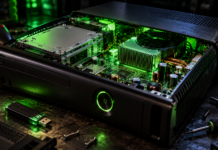
After more than 12 years, Microsoft’s original Xbox One has finally fallen to a hardware-level security exploit. Known as Bliss, the breakthrough bypasses critical protections in the console’s boot process and opens the door to unsigned code, deeper system access and potentially a new generation of Xbox One homebrew.
But this is not another simple JTAG installation or a downloadable jailbreak.
The breakthrough relies on precisely timed electrical interference with the console’s hardware. Researchers and independent developers are now exploring how to make the technique more reliable and potentially turn it into a practical modchip.
And there is already another exciting development: Linux has been demonstrated running on an Xbox One using a separate experimental hardware setup.
For console modding enthusiasts, this could be the beginning of something significant.
The Xbox One’s 12-Year Security Barrier Has Been Broken
When Microsoft released the original Xbox One in November 2013, its security architecture quickly developed a reputation for being exceptionally difficult to defeat.
Unlike the Xbox 360, which eventually became famous for the Reset Glitch Hack (RGH), the Xbox One resisted publicly demonstrated hardware-level compromises for more than a decade.
Its security architecture includes multiple boot stages, cryptographic verification, hardware-protected keys and a dedicated security processor.
The purpose is straightforward: prevent modified software and unauthorised code from running on the console.
That barrier has now been overcome.
At the RE//verse 2026 security conference, researcher Markus “Doom” Gaasedelen demonstrated an exploit called Bliss, showing how carefully timed voltage glitches could interfere with the Xbox One’s hardware security mechanisms.
The demonstration marked a major milestone in console security research.
What Is the Bliss Exploit?
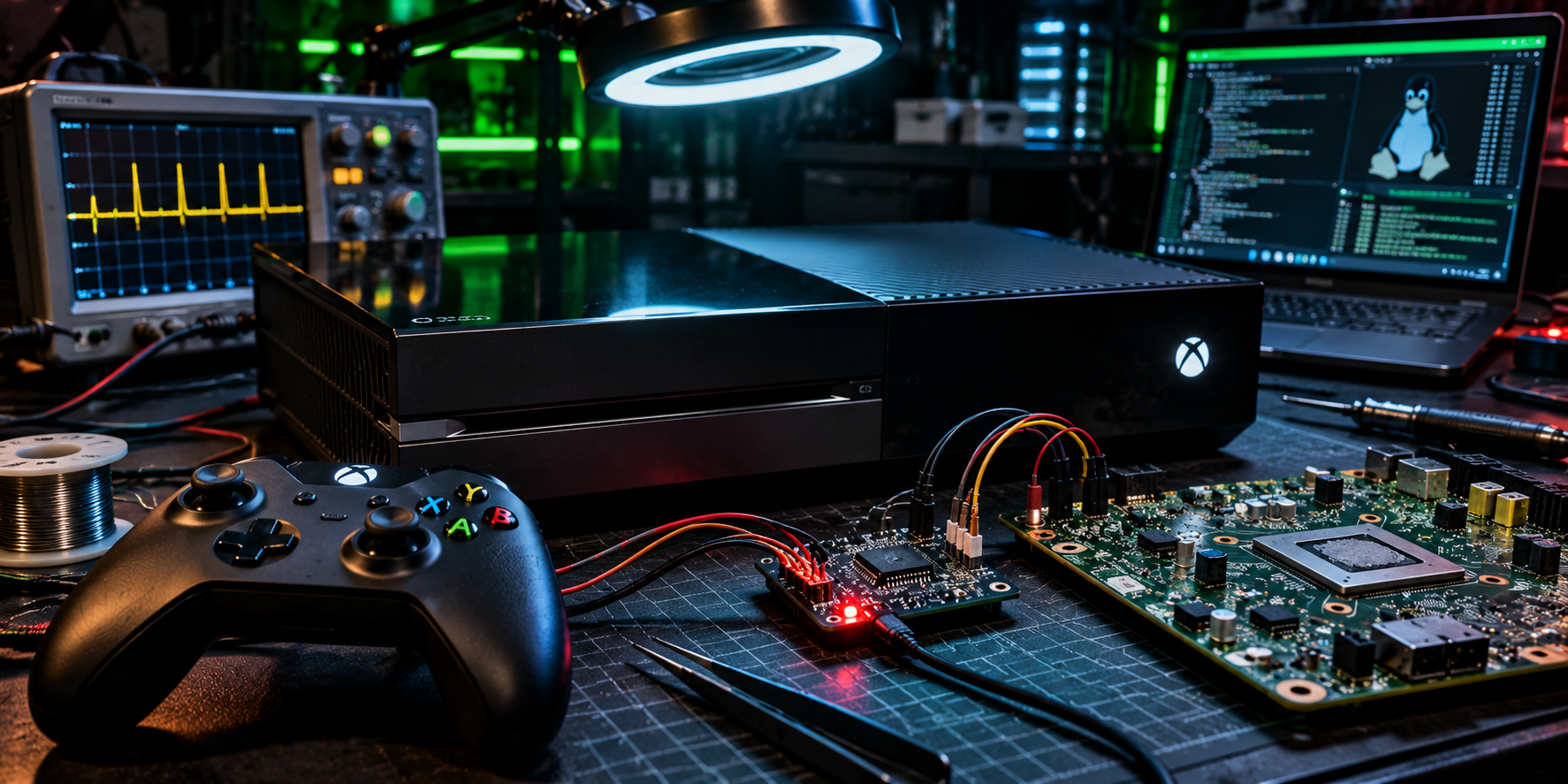
Bliss is a hardware attack known as voltage fault injection, sometimes called voltage glitching.
Rather than exploiting a traditional software vulnerability, the technique manipulates the electrical behaviour of the console during its early startup process.
By briefly disrupting a power rail at extremely precise moments, researchers can cause the processor to skip or incorrectly execute critical instructions.
The Bliss technique uses two carefully timed glitches.
The first interferes with the initial memory protection setup. The second targets a memory-copy operation during the boot process, allowing execution to be redirected towards attacker-controlled data.
The result is a compromise of the console’s early boot security.
According to the research demonstration, this opens the possibility of running unsigned code at multiple levels of the system, including the hypervisor and operating system.
It also provides access to deeper security functionality that could help researchers investigate firmware encryption and the console’s internal architecture.
The important distinction is that Bliss attacks the physical hardware rather than a normal software vulnerability. Microsoft cannot simply eliminate the underlying silicon behaviour with an ordinary dashboard update.
Why This Is Different From Xbox 360 JTAG and RGH
Many Xbox enthusiasts will immediately compare Bliss with the famous Xbox 360 JTAG and Reset Glitch Hack modifications.
The comparison makes sense, but the technologies are different.
| Modification | Console | Basic technique |
|---|---|---|
| JTAG | Xbox 360 | Exploits a vulnerability in the boot process |
| RGH | Xbox 360 | Manipulates reset timing to interfere with boot security |
| Bliss | Original Xbox One | Uses precisely timed voltage glitches |
| Developer Mode | Xbox One | Microsoft’s official development environment |
RGH helped create a massive Xbox 360 homebrew scene, allowing enthusiasts to run custom software and explore the console beyond its original restrictions.
Bliss could potentially open a similar chapter for the Xbox One.
However, the hardware requirements and complexity are considerably different. This is not currently a simple modification that owners can perform using a readily available chip.
Independent Researcher Reproduces the Exploit After More Than One Million Attempts
One of the most interesting developments came in August 2026.
An independent developer known as leor reported successfully reproducing the Bliss exploit.
The researcher published statistics showing just how difficult the process had been:
- More than 1,039,495 recorded glitch attempts.
- Approximately 419,825 recorded boots.
- Around 214 successful first-stage memory protection bypasses at the final timing window.
- One successful full code-execution result.
Including attempts that were not recorded in the research databases, the developer estimated that the total exceeded 1.3 million attempts.
This is an important detail.
Bliss is not simply a matter of connecting a device and pressing a button. The timing must be extremely precise, and successful execution is difficult to reproduce.
The independent result is currently based on the researcher’s own public reporting rather than a fully published, independently verified technical replication.
Nevertheless, it demonstrates the level of engineering required to turn the original discovery into something repeatable.
Could an Xbox One Modchip Be Coming?
This is where things become particularly interesting for the console-modding community.
Several projects are exploring ways to automate the Bliss exploit using external hardware.
One project from GFL_Tech aims to develop an open-source modchip capable of handling the timing and hardware interactions required by the exploit.
The project’s stated objective is to make the process more accessible to the homebrew and console-preservation communities.
However, its published development roadmap still lists important work as incomplete, including:
- Circuit design and hardware development.
- Automated glitch timing.
- Testing and validation.
- Repeatability improvements.
- Development of a working prototype.
In other words, the project is not yet a finished consumer product.
There has also been discussion around another project called Coldforest, which reportedly aims to develop a more advanced hardware solution based on Bliss.
Its technical ambitions include custom firmware, deeper system access and Linux support. However, publicly available information does not establish that it is a finished, independently verified modchip.
For now, anyone advertising a fully working plug-and-play Xbox One Bliss chip should be treated with caution.
Linux Has Now Been Demonstrated Running on Xbox One
Another development arrived on October 28, 2026.
Developer Mezone demonstrated Linux running on an Xbox One, showing another possible future for the console.
There is an important technical detail, though.
The demonstration did not use the Bliss exploit. Instead, it relied on a special experimental hardware setup to test the Linux side of the project.
The developer has indicated that the intention is to combine the Linux environment with a Bliss-based solution once the exploit is sufficiently developed.
Why does this matter?
A successfully unlocked Xbox One could potentially become more than a gaming console.
Linux support could open opportunities for:
- Homebrew software development.
- Experimental operating systems.
- Hardware research.
- Emulation development.
- Digital game preservation.
- Home-lab and computing experiments.
The original Xbox One contains capable hardware that has been restricted by its original software and security architecture.
A reliable route to running alternative software could give the hardware a second life.
Which Xbox Consoles Are Supported?
One of the biggest questions is whether Bliss works on every Xbox One.
The current research primarily concerns the original launch-era Xbox One hardware.
| Console | Bliss status |
|---|---|
| Original Xbox One (2013) | Demonstrated research target |
| Xbox One S | No confirmed equivalent exploit |
| Xbox One X | No confirmed equivalent exploit |
| Xbox Series S | No confirmed equivalent exploit |
| Xbox Series X | No confirmed equivalent exploit |
Owners should not assume that all Xbox One consoles are compatible.
Hardware revisions, motherboard designs and system-on-chip differences can make a significant difference when dealing with voltage fault injection.
The original Xbox One remains the primary target of the publicly demonstrated Bliss research.
What Could This Mean for Xbox Game Preservation?
Perhaps the most important long-term consequence has little to do with cheating or piracy.
It is preservation.
As consoles age, digital storefronts change, online services disappear and older games become increasingly difficult to access.
Hardware-level access could allow researchers to investigate encrypted firmware, document system behaviour and develop preservation tools.
It could also contribute to future emulation research.
The Xbox One’s security architecture has historically made this kind of work particularly challenging.
Bliss potentially changes that situation by giving researchers access to parts of the system that were previously difficult to investigate.
That does not mean a complete Xbox One emulator is around the corner, but it creates new possibilities for the preservation community.
Is the Xbox One Jailbreak Available Yet?
This is probably the question most Xbox owners want answered.
Not as a simple, publicly available jailbreak for ordinary users.
The Bliss exploit has been demonstrated, and independent reproduction has been reported. Linux has also been shown running through a separate experimental hardware setup.
However, several obstacles remain before this becomes comparable to installing an RGH modification on an Xbox 360.
The main challenges include:
- Making the voltage-glitch process repeatable.
- Developing reliable hardware capable of automating the exploit.
- Establishing compatibility across different hardware revisions.
- Developing stable software and homebrew environments.
- Making the installation process accessible without requiring extensive hardware experience.
There is currently no confirmed universal Xbox One jailbreak package or finished consumer-ready Bliss modchip.
Owners should be cautious about websites advertising downloadable Xbox One JTAG software or guaranteed one-click jailbreaks.
Final Verdict: A New Chapter for Xbox Modding Could Be Beginning
For more than a decade, the original Xbox One remained one of the most difficult mainstream gaming consoles to compromise at the hardware level.
Bliss has changed that.
The breakthrough, independent reproduction efforts, emerging modchip projects and recent Linux demonstration all point towards a growing research and homebrew scene.
But there is still a difference between proving that a console can be hacked and developing a reliable modification that thousands of people can install.
The Xbox 360 had JTAG and RGH. The original Xbox One may eventually have Bliss.
The biggest question now is not whether the Xbox One can be hacked. It is how long it will take before ordinary enthusiasts can do something useful with that breakthrough.
What do you think?
Would you modify your original Xbox One if a reliable Bliss modchip became available?
Would you rather run Linux, explore homebrew applications or use it for game preservation?
Join the discussion and share your thoughts.
Sources and further reading
- RE//verse 2026 – Hacking the Xbox One presentation
- Tom’s Hardware – Microsoft’s Xbox One security finally falls to Bliss
- Modda – Independent reproduction after more than 1.3 million attempts
- Modda – Linux boots on Xbox One
- GFL_Tech – Open-source Bliss modchip development
Information reflects publicly available research and reporting as of November 2, 2026. Some hardware projects remain experimental and their claims have not been independently verified.